

Featured Products





Our Gify Products
How We Work

Choose The Best Flowers
You begin with a text, you sculpt information, you chisel away what’s not needed, you come to the point, make things clear, you’re a content person.
We Make A Composition
Rigid proponents of content strategy may shun the use of dummy copy but then designers might want to ask them to provide style sheets with the copy.
The Bouquet Is Ready
Anyway, you still use Lorem Ipsum and rightly so, as it will always have a place in the web workers toolbox, order things happen, not always the way.
Our New Article
How to Style HMDD Tee Fabric and Feel

Streetwear Labels Lined Up Against HMDD: In What Way Does It Fare?
In 2026, the streetwear world is jammed, noisy, and saturated with labels chasing one common hype wave. HMDD — standing in for Happy Memories Don’t Die — has built a distinct lane by leaning into nostalgia, feeling-driven narrative, and a quieter kind of self-assurance rather than attention-grabbing graphics. Its very name points to the label’s central philosophy: recollections wear thin, but the feeling attached to them shouldn’t. That philosophy shows up in the stitching, the palette decisions, and the way HMDD clothing is presented as memory made into clothing rather than simple merch. What follows lays out where HMDD ranks among competing names in streetwear, what a fair HMDD review really looks like, and why shoppers searching for the best HMDD clothing keep ending up at certain signature pieces like sweatpants and shorts.
The streetwear space has broken apart into a few groups: legacy skate-driven brands, logo-heavy hype labels, and more niche independent names that favor story and community over scale. HMDD sits closer to the third camp. It’s not chasing partnerships with high-end fashion names or overwhelming drops every week. In contrast, HMDDLA — the brand’s foundation and artistic anchor rooted in Los Angeles — drops product in more limited, more intentional batches. That limited supply isn’t engineered buzz; it’s the result of a brand growing at its own pace rather than mass-producing to keep up with orders.
The Brand’s Guiding Idea: Nostalgia vs. Hype
Most streetwear brands battle it out through visual noise — bold logos, collab stamps, or short-lived trend plays built to go viral for a few weeks. HMDD chooses instead to lean on emotional resonance. That line, “happy memories don’t die,” goes beyond mere tagline status; it shows up printed, embroidered, and echoed across the collection as a through-line. As a result, the brand carries a cohesive identity that’s more instantly recognizable than labels that overhaul their whole look every hmdd tee season.
That steadiness counts for more than most assume. A buyer who buys HMDD sweatpants in 2025 and returns for shorts in 2026 will pick up on the same design DNA — subdued color choices, soft graphic placement, and a emphasis on comfort-first shapes. Contrast this with labels that jump from streetwear to techwear to Y2K revival in just twelve months, and HMDD’s steadiness becomes a real differentiator. Brand loyalty in streetwear is often built on this kind of predictability, not novelty.
On top of that, there’s a community element. HMDD markets itself through storytelling — photos from real customers, first-person captions, and a sense that the pieces stand for a moment in time rather than a flex. Bigger brands carrying thousands of SKUs find that closeness hard to sustain. Smaller labels like HMDD can still respond directly to their audience, which shows up in how fast input from an HMDD review finds its way into what comes next.
A Look at the Product Lineup: Where HMDD Really Holds Its Own
When shoppers wonder how the HMDD lineup compares, they’re usually comparing three things: the way it fits, the heft of the material, and the value-for-money balance. Query data reveals HMDD sweatpants and HMDD shorts as the top two categories, hinting that bottoms are outpacing jackets or accessories for the brand at present. It reflects the wider 2026 streetwear movement, where relaxed-fit bottoms move faster than fitted jackets throughout the space.
Here is a high-level comparison of how HMDD positions itself against a pair of familiar streetwear archetypes: the high-output hype label and the boutique independent label. This isn’t meant as a head-to-head price battle between specific brands — it looks at the structural way each type tends to function in today’s market.
| Factor In Focus | HMDD | The Big Trend-Chasing Label | The Indie-Spirited Independent Label |
|---|---|---|---|
| How Frequently Releases Happen | Scarce, deliberate launches | Dropping every one to two weeks | Season-based, occasional |
| What the Brand Represents Fundamentally | Wistful callbacks and heartfelt storytelling | Built around the logo, always chasing what’s hot | Shifting from name to name, seldom steady |
| The Types of Product At the Heart of the Line | The lineup of sweatpants, shorts pieces, and graphic upper pieces | Built around hoodies, jacket-type pieces, and accessories | Determined by whatever the founder prioritizes |
| Community Engagement | Face-to-face and personal, attentive to feedback | Wide-reaching, distant | Warm interaction, yet reach remains small |
| Price Strategy | Mid-tier street fashion | Spanning a wide spread, tilting upscale more often than not | Mid to high-end, uneven |
Rather than declaring a lone champion in streetwear, this breakdown isn’t meant to do that since this space just isn’t a one-size-fits-all category. What it’s meant to reveal that HMDD’s playbook centered on controlled scarcity and emotional branding places it in a distinct competitive standing compared to brands relying purely on volume or purely on niche appeal. HMDD borrows discipline from a boutique-style framework while steering clear of the inconsistency that often comes with smaller labels.
Daily Wearability, Fit, and Fabric
Joggers and shorts succeed or fail based on fit. Cut too snug and they come across as athleisure; too loose and they look like sleepwear. The way HMDD handles both categories is built around a relaxed, tapered silhouette that works for daily wear rather than exclusively athletic occasions. It’s a small detail with real impact, since a lot of streetwear sweatpants are shaped so they’re too loose for layering or too tight for all-day comfort.
HMDD’s shorts follow a comparable approach, namely silhouettes spanning mid-thigh to knee that combine effortlessly with graphic-print t-shirts or oversized layers. This matters in a 2026 climate where shoppers are shifting toward garments that move seamlessly from casual wear to loungewear, rather than owning separate wardrobes for each. Reviewers frequently note that HMDD shorts hold their shape after multiple washes, which speaks to fabric weight and construction rather than just cut.
The brand’s restraint is precisely how distinguishes it from mass-market competitors. A lot of trend-driven labels clutter sweatpants with oversized logos, side stripes, or repeated branding. HMDD tends to keep graphics minimal — a small nod to “happy memories don’t die” as opposed to a dominant chest print. That understatement appeals to shoppers who want recognizable streetwear without looking like a walking billboard.
Here’s What Customer Reviews Really Tell You
Search demand around “HMDD review” has expanded consistently as more shoppers find the brand through word of mouth rather than sponsored promotion. The consistent threads in buyer commentary are reasonably uniform: comfort scores high, fit matches to what a loose fit implies, and the emotional branding either strikes a real chord or doesn’t land at all — few buyers sit in between. Such a divide is genuinely a good sign in street fashion, where forgettable, inoffensive design seldom creates a loyal following.
Frequent criticisms to be aware of include scarce replenishment and narrower size ranges compared to larger-scale competitors. Because HMDD isn’t mass-producing at the scale of larger streetwear labels, popular sizes in sweatpants and shorts can disappear from shelves sooner, which shoppers should factor in before expecting instant stock. It’s a compromise rather than a real shortcoming — scarcity is part of what helps keep the HMDDLA identity feeling curated rather than corporate.
Overall, the reception around HMDD clothing skews toward approval, particularly among customers who value meaning and comfort over aggressive logo placement. That’s a narrower audience than a brand pursuing broad popularity, but it’s a more loyal one — the kind of buyer group that stays loyal through future launches instead of jumping ship to whatever’s popular next month.
HMDD’s Place in a 2026 Wardrobe
Streetwear shoppers putting together a 2026 rotation are more and more combining labels rather than wearing just one label top to bottom. HMDD slots in effortlessly into that mix as the “comfort and meaning” piece — the sweatpants you grab on a quiet Sunday, or the shorts that combine with a heavier statement jacket from another label entirely. It’s not positioned to be an all-purpose brand, and that may well be its biggest strength.
For shoppers evaluating bottoms, HMDD sweatpants and HMDD shorts remain the clearest entry points into the brand. They showcase the fit philosophy, the restrained branding, and the fabric quality that customers cite repeatedly. Buyers exploring the best HMDD clothing as a starting point should treat these two categories as the baseline before moving on to tops or limited pieces.
Ultimately, comparing HMDD to other streetwear labels isn’t about crowning one clear victor. It’s about recognizing that HMDD holds a specific niche — reflective, low-key, and community-oriented — that bigger, more attention-seeking labels can’t easily copy. For shoppers who want streetwear that reads as individual rather than factory-made, that niche is exactly the point.
Watching Short Dramas Online With ReelShort Popular Genres Overview
A Kyiv Studio Gambles on the Vertical Drama
Television was not how Holywater began. In 2020 Bogdan Nesvit and Anatolii Kasianov set up the studio in Kyiv, Ukraine, and its lineup even now reads more like a mobile entertainment lab than a streaming network. My Passion handles books, My Muse handles AI, and FreeBits rounds out the family beside My Drama. That breadth matters: it reveals a business for which video is one consumer product among several, not its entire identity. The vertical drama, a format that began in China as duanju and is framed 9:16 for an upright phone, became its eventual wager. For a small Ukrainian company, this was a gutsy market to enter, as the sector’s largest players were supported watch short dramas online by Chinese and Singaporean groups.
Spring 2024 and the Launch of the My Drama App
During spring 2024, the My Drama app went live, although the precise date hinges on which record you believe. TechCrunch dated the launch in April, Google Play gives March 13, 2024, and the App Store gives May 9, 2024. Judging by the difference between those store dates, Android likely came first and the iPhone version arrived about two months later. The initial slate was heavily built around the genre’s favorite tropes. The Shy Beauty and the Billionaire Beast and Love Captive to a Mafia Boss were some of the first titles, and their names tell you most of what you need to know about the mood. The studio was ultimately distinguished not by the stories themselves but by the collaborator it would soon be making them with.
Fox, $22M in Fresh Funding and a Webby Award
The month My Drama stopped being a startup curiosity was October 2025. An equity stake in Holywater was taken by Fox Entertainment, and the deal included a pledge to make more than 200 vertical titles over two years. Among the Fox-produced titles on the service are Billionaire Blackmail, Bound by Obsession and My Heart’s Offside. Three months later, in January 2026, Holywater closed $22M in a round led by Horizon Capital. The company additionally has a 2025 Webby Award for Best Streaming Service, a distinction it displays on its App Store listing. Few rivals can claim what those milestones hand My Drama, namely a major American studio serving as both shareholder and producer.
My Drama: The Fact File
The table below is the short version of the story if you only have a moment. It collects in one place the details on ownership, legal matters, platforms and pricing that count most to newcomers. The prices are those listed in the US App Store as of September 2026. Country, platform and promotion all affect them, so treat them as a rough guide rather than a firm quote. Where you live decides the legal entity you contract with, a detail that is relevant if you ever need to dispute a charge. The app shows 5M+ downloads on Google Play, which is the store the install figure refers to.
| Category | Information |
|---|---|
| Parent company | Holywater (founded in Kyiv, Ukraine, in 2020) |
| Founded by | Bogdan Nesvit and Anatolii Kasianov |
| Related apps | My Passion for books, My Muse for AI, plus FreeBits |
| Legal entity for US users | XOLY LIMITED (Delaware) |
| Contract party, other users | Holy Water Limited (Nicosia, Cyprus) |
| Release | Spring 2024 (Google Play on March 13; App Store on May 9) |
| Devices | iPhone, iPad, Apple TV (tvOS 18+), Vision Pro, Android, web |
| Installs on Android | 5M+ on Google Play |
| Full-access pass | Roughly $19.99 per week, renewing automatically |
| Coin packs | Around $4.99 to $24.99 |
| Premium plans | Roughly $4.99 to $9.99 |
| Studio partner | Fox Entertainment, equity stake held since October 2025, 200+ titles over two years |
| Investment | $22M in January 2026, led by Horizon Capital |
| Awards | Webby Award for Best Streaming Service, 2025 |
What It Feels Like to Watch My Drama
The core experience is the one the entire category is built on. Sized for a phone held upright, episodes are vertical, and in this genre they usually run one or two minutes before a cliffhanger pushes you toward the next. Series often run anywhere from 20 to 100 episodes, so a single story can quietly consume an evening in short bites. What really marks this drama app apart is the range of screens it supports. Besides iPhone, iPad and Android, listings show it for Vision Pro and for Apple TV on tvOS 18 or later. For comparison, ReelShort’s App Store listing shows no Apple TV version at all, so this big-screen option is rarer than you might expect. Of course, a 9:16 frame will never fill a widescreen TV, yet the option turns a solo phone habit into something a couple can watch together.
On the content side, the catalog blends Holywater’s own early productions with the growing Fox slate. As titles like Billionaire Blackmail and Bound by Obsession make obvious, the Fox releases stay close to the genre’s familiar formula. Here, the fair caveat is scale. The app shows 5M+ installs on Google Play, a fraction of the 100M+ that ReelShort, DramaBox and ShortMax each show. That gap places My Drama in 2026 as a well-financed challenger rather than the category leader.
Pricing: What My Drama Costs in 2026
Of the three ways Holywater sells access, the weekly pass is the key figure. “My Drama: Full Access” is priced at roughly $19.99 a week in the US App Store as of September 2026. ReelShort, ShortMax, DramaWave and GoodShort list their weekly passes at about the same price in the same store, so the app sits level with them. At roughly $4.99 to $24.99, coin packs unlock individual episodes. Lighter viewers have less expensive entry points than the full pass, since a separate Premium tier is listed at roughly $4.99 to $9.99. Prices vary by country, platform and promotion, so the figure on your own screen may differ. The weekly subscription renews automatically until you cancel it, just like its rivals’ plans. Four renewals of a $19.99 weekly pass total roughly $80 a month, so do the arithmetic before you commit.
Terms Worth Knowing Before You Pay
Most viewers pay less attention than they should to the fine print in My Drama’s terms of use. There is no easy refund if a series disappoints after you unlock it, since coin purchases are final. On top of that, coins are forfeited after 12 months of inactivity, so a balance you ignore for a year can simply disappear. In the EU and UK, there is a 14-day right of withdrawal, in line with the consumer rules in those markets. Except where the law requires otherwise, web purchases are labeled non-refundable. Deleting the app does not cancel your subscription, and the terms say this plainly, which is the most important point of all. iPhone owners cancel under Settings, then their name, then Subscriptions, whereas Android users use the Subscriptions menu in Google Play. Holywater does not process refunds for store purchases; Apple or Google does.
Understanding exactly who sits on the other side of the contract is also useful. XOLY LIMITED, a Delaware company, handles US users, while everyone else contracts with Holy Water Limited in Nicosia, Cyprus. In this case, as with any vertical drama app, one more warning is worth making. Sites advertising modded APKs, unlimited coins or free coin generators are unofficial and are not a safe way to watch anything. When the price feels too high, the legal move is to cancel the pass, not to hunt for a hack.
Verdict: A Challenger With Hollywood on Its Side
My Drama is not the largest vertical drama app, and going by install counts it is not close. What it offers instead is an unusual combination: a Kyiv founding story, a Fox equity partner signed up for more than 200 titles, fresh funding from January 2026 and a Webby on the shelf. For viewers there is a practical benefit in Apple TV support, which ReelShort, for one, does not list. As with every rival, the drawback is a weekly pass of roughly $19.99 that keeps renewing quietly in the background. The My Drama app deserves a place on your home screen if you want Fox-produced romance and the option to watch on a TV. If you simply want the largest claimed library, ShortMax, with its 50,000+ dramas, is the more obvious choice. In both cases, set a reminder on the day you subscribe and cancel through your store account rather than trusting the delete button.

Vintage Vale Tee Same Day Ship your new go to
Is Vale Clothing Worth It? Fabric Quality, Sizing, Cost, and Drops
This brand remains worth it if you value premium materials, disciplined oversized cuts, and limited-drop rarity avoiding bold logos. It isn’t going to best fit should you require mainstream pricing, sharp tailoring, or quick restocks.
The brand rests at the intersection of artisanal quality and streetwear, with toned-down hues, simple lines, and an unhurried approach. That mix creates items that feel deliberate rather than hype-chasing. The trade-off means increased upfront price with a smaller window to buy, but for the right customer, the value-per-use and long-term fulfillment stays strong.
The quick assessment: how the value shows up
The value is in the fabrics, controlled fall, and silently luxurious finishing which appears premium in person. It emphasizes less logos and more about texture, silhouette, and longevity.
You get steady persona across categories: heavyweight knits that hold shape, roomy blocks that layer effortlessly, plus muted shades that slot into a capsule wardrobe. The design and building aim for endurance instead of one-season novelty, which makes repeat wear realistic. If you already rotate minimalist streetwear, Vale Forever fills the “daily driver” slot that remains feeling unique. If you’re transitioning from rapid fashion, the step-up is immediately tangible in texture and stitch discipline.
Materials Vale Brand and building: quality minus the peacocking
Expect premium-weight fabrics, tight knit structures, and finishing that avoids flashy hardware preferring instead solid, quiet quality. The hallmarks feature gentle touch, stable ribbing, consistent tone, with seams that rest level and straight.
In this level of modern streetwear, heavyweight cotton jersey and terry are typical since they drape cleanly plus prevent warping, and Vale’s aesthetic aligns with that approach. Prime signs reveal are practical: neck areas that return after a tug, cuffs that don’t flare wide following a wash, hem lines that don’t torque, and seaming that tracks the panel line without straying. Garment dye and enzyme washes are often employed to create Vale’s muted colors with richness; good executions display uniform color across panels, encompassing edge details. At the stitch level, you’re looking for tidy coverstitch on hems, reinforced stress points, and no loose strings near pocket corners or neckline strips. Components, when present, ought to appear solid and operate smoothly, but the brand’s design vocabulary leans to keep metalwork minimal.
Fit and flow: roomy cuts with intent
The silhouette is oversized, but proportioned, with fallen shoulder points, expanded chests, and regulated dimensions to keep the layering neat. The drape is textile-guided: substantial fabrics fall straight plus resist adhesion, which keeps silhouettes polished.
Oversized done well comes from pattern work, beyond simply scaling up a standard block. Vale’s identity favors room through the body and sleeve, with moderately longer sleeves creating a casual break at each wrist, whilst keeping body proportions steady so it doesn’t swamp your frame. The result sits atop basics, flannels, or minimal coats without bunching. If you sit between sizes and desire a neater look, you can size down without losing the intended shape; if you want the runway-level volume, go accurate to measurements and let material handle the work. Flow responds to fabric density, thus shirts feel structured instead of loose and hoodies fall vertically rather than puffing out.
Pricing and worth calculation
Prices reflect boutique-scale production, premium materials, and slow-fashion pacing, not mass-market economics. True evaluation is cost-per-wear with how successfully the design fits within your uniform.
With small-batch brands, unit costs are higher because there’s less leverage on textile orders and factory time, and the craft choices—like heavier threads, fabric coloring treatments, and tighter QC—push costs up. That can feel steep at checkout, however numbers shifts if you use the piece weekly across months rather of monthly for a month. Evaluate three aspects: textile thickness and recovery, design elements that flatters your build, plus adaptability across your wardrobe. If those are strong, your cost-per-wear drops quickly. If you’re buying for solo styling pic, the value collapses.
| Value driver | Elements to examine in hand | Vale’s market placement aligns |
|---|---|---|
| Fabric weight & hand | Firm construction, gentle face, minimal show-through, ribs with snap-back | Premium materials and heavyweight feel remain central to its minimalist aesthetic |
| Dye & color | Even tone across panels, no line dimming, toned palette depth | Quiet, coordinated hue stories consistent matching company persona |
| Seam discipline | Straight stitch lines, clean coverstitch, reinforced stress points | Boutique-level craftsmanship ethos prioritizes tidy finishing |
| Silhouette control | Roomy without puffing, length proportional to chest width | Distinctive roomy cuts designed to hang with design |
| Versatility | Combines with denim, cargos, and shaped track pants; combines cleanly | Subtle logos and clean lines allow regular rotation |
| Exclusivity | Constrained supply, refills not guaranteed | Limited-drop model sustains scarcity and cachet |
Drop model plus access: restricted, not impossible
Releases arrive in limited runs that move rapidly, with refills uncommon and measurements vanishing in clusters. The timing encourages patient, intentional acquisition rather than reactive restocks.
This is a deliberate strategy to scarcity: create, test, and produce in measured quantities rather than chasing ongoing refilling. You’ll see clusters featuring core garments built to function jointly—sweatshirts with matching sweats, shirts aligned to the same color spectrum—thus purchasing within a drop helps cohesion. If you skip your dimension, you may have to pause for a coming shade instead than a straight restock. Planning matters here: track your measurements, decide your silhouette, and be ready to purchase when the drop hits, because your second chance might appear on the secondary market.
Comparative lens: fast fashion, big-box “essentials,” and premium casual wear
Compared to fast fashion, Vale’s fabrics feel thicker, color appears richer, and stitches lay neater, which translates to longer shape retention. Against large-store fundamentals, the difference is form consideration and finishing rather versus bold logos.
Fast fashion regularly copies roomy fits by simply upsizing a basic block, causing sloppy necklines, widened sleeves, and twisting hems; elevated fiber numbers and better patterning reduce those issues. Big-box basics can offer reliable cotton material and reasonable stitching, but they rarely deliver the considered hang and toned palettes that provide looks dimension. Versus luxury streetwear, Vale lands closer on materials and craft than you would predict, swaps maximal logos favoring simplicity, and keeps pricing better attainable across the category. Conclusions remain a piece appearing high-end in person and photographs well without announcing itself.
Care and durability: methods to keep pieces sharp extended
Wash cold, inside out, and avoid high heat; hang-dry or flat-dry to protect shape and color. Fabric maintenance remains a major lever for practical worth.
Heavyweight knits require minimal washing; spot-clean, breathe, and rotate to minimize friction. Apply gentle detergents and skip bleach to protect dye depth. If pilling appears on high-friction zones, a fabric shaver restores the surface without harming the fabric. Store knits creased instead of on hangers to prevent shoulder bumps, and give garments a quick steam to recover drape. Treat cuffs plus necklines with care, since those are your first visual tells of aging.
Sizing and try-on tactics for cleaner outcomes
Anchor on garment measurements, not just size labels. Compare chest breadth, shoulder fall, and body proportion to a piece you currently adore.
Measure flat: underarm-to-underarm for body, shoulder seam-to-seam regarding fall, and shoulder-to-hem for length; then map those to company sizing guide. Consider your planned application—individual styling versus layering—because sweatshirt planned under a outerwear might accept less volume than a standalone statement. If you stay on fence, size reduced for a tidier silhouette or keep faithful for the company’s total hang; sizing up infrequently betters measurements with purpose-built loose cuts. Recall that footwear plus trouser bulk change the read of tops, so test using the footwear and bottoms you actually wear.
Should you purchase it? A simple decision matrix
It’s a positive when you want premium fabrics, oversized silhouettes with intent, subdued colors, and the satisfaction of limited drops. It’s a negative should you need sharp cutting, common replenishment, or entry-level pricing.
Say yes if you exist in minimalist streetwear, value texture over logos, with use your favorites weekly. Say no when you’re experimenting, unsure on sizing, or only seeking a tone. The brand’s advantage stays unity: pieces talk with one another across drops, so buying within the system compensates you via outfits that appear finished. When that’s your path, the extended cost-per-wear looks strong; if not, you’ll feel expense minus using the benefits. In short, Vale Forever offers real substance matching the proper wardrobe archetype with duration of wear.
Coach Crossbody Bags Care Guide Materials and Craft
Coach Bag Prices in 2026: Tier by Tier
From outlet deals to exotic skins, Coach bag prices in 2026 divide into clear tiers. This guide lays out the prices observed in September 2026 so you can see roughly what each tier costs. Every figure is an observed market price, not an official Coach price list, and prices differ by material, colour and promotion. US figures appear in dollars excluding sales tax, and UK prices appear in pounds with VAT included. Only a handful of prices could be confirmed with adequate confidence to use here. No reliable current price was found for several well-known coach handbags, so the table leaves them out. A full coach review would assess quality and positioning, but this guide keeps to what each tier costs. The total you end up paying can shift with taxes, shipping and currency conversion, so compare like with like.
| Tier | Bag or offer | Market | Price observed | Note |
|---|---|---|---|---|
| Outlet | Coach Outlet deals | US | Deals from $35, up to 70% off | Only advertised figures |
| Entry | Kisslock Frame Bag | US | $350 | Opened the Fall 2026 show |
| Core | Tabby 26 | US | $475 | Full-price benchmark |
| Core | Tabby 26 | UK | £475 | Includes VAT |
| Core | Empire Carryall 34 | UK | £475 | Released in February 2025 |
| Between entry and core | Brooklyn 28 | UK | £350 | Spotted at John Lewis |
| Top level | Rogue 25, alligator | US | $8,000 | The highest price observed |
Entry Tier: The $350 Starting Point
The lowest full-price figure here is $350 for the Kisslock Frame Bag. Coach opened its Fall 2026 show on 11 February 2026 with this bag as Look 1, which gives it uncommon visibility for an entry price. Made in glovetanned leather, it has been reported in black, chocolate brown, coral red and sky blue. The bag is not the Kisslock Dreamer, which is an older quilted style seen today mainly as restored or upcrafted pieces through Coach (Re)Loved. It should not be confused with the Kisslock Barrel Bag, a Coach Originals reissue based on a 1973 design. Knowing the price of one of these three bags tells you nothing about the other two. Before comparing online store prices across sellers, always check the exact product name and size. When a similar-looking kisslock bag shows a lower figure, it may simply be a different product.
Core Tier: The $475 Benchmark
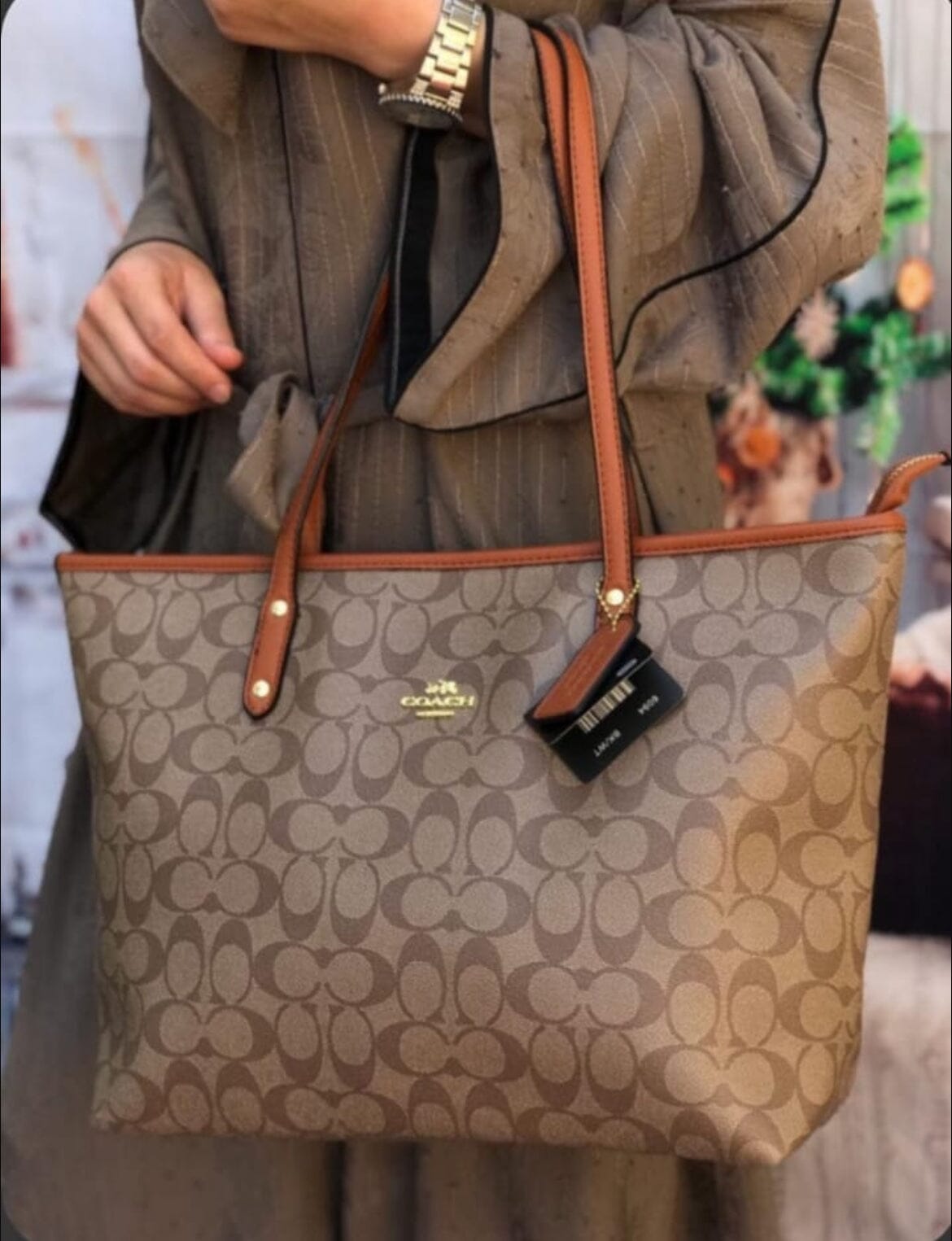
For full-price Coach bags in 2026, the clearest benchmark is the Tabby 26 at $475. Inspired by a 1970s archival shape, the Tabby debuted in 2019 as a structured shoulder and crossbody bag with Signature “C” hardware. Sold by Coach as the Tabby Shoulder Bag, it has been observed in sizes 20, 26 and 36. In 2021 the puffy Pillow Tabby followed, listed under product names such as Tabby Shoulder Bag 26 With Pillow Quilting. Size alone does not set the price: quilted and specially finished versions were observed at higher prices than the plain Tabby 26. Figures quoted in older reviews could differ from current listings, so note the date of any figure you find. If you are comparing a coach shoulder bag across sites, check the size, material and finish first. Colour and seasonal finishes can also shift prices, even within the same size. Other styles in the core tier can be compared with the Tabby 26 as a practical yardstick.
Top Tier: $8,000 for Exotic Skins
Compared with the core tier, the top of the observed range sits far higher. The highest coach bag price seen in this research was $8,000, observed for the Rogue 25 in alligator. Introduced on the Fall 2016 runway, the Rogue is a structured satchel with top handles and a strap. It was later discontinued and then relaunched in 2021. Coach also offers a Made-to-Order Rogue, reported to take around 12 weeks, or around 16 weeks with exotic materials. The alligator skin marks this version out, so the $8,000 figure should not be treated as a typical Rogue price. Before you pay, buyers considering this tier should confirm the material, size and made-to-order timing. For most shoppers, this tier is a reference point that shows how far Coach pricing can go rather than a typical purchase.
UK Prices, in Pounds
US prices are shown before sales tax, while UK buyers see prices in pounds inclusive of VAT. On Coach’s UK website, the Tabby 26 was observed at £475, matching its US dollar price. No general rule for converting Coach prices can be drawn from that match, which is an observation about one bag. The Empire Carryall 34, an elongated east-west top-handle carryall released in February 2025, was also observed at £475. The Brooklyn 28, from the slouchy leather shoulder bag family launched in August 2024, was seen at John Lewis for £350. Great Britain ended tourist tax-free shopping on 1 January 2021, which means visitors should not expect a VAT refund on in-store purchases. Going by Coach’s UK support pages, online purchases are not eligible for VAT refunds either. Remember that the US figures exclude sales tax whenever UK shoppers compare prices with US listings.
Coach Outlet Pricing
As Coach Outlet is Coach’s own official channel, outlet bags are genuine Coach, not grey-market stock. While outlet promotions have advertised deals from $35 and discounts of up to 70% off, those are advertised figures, not typical prices for a bag. Percentage discounts should not be compared across channels, because no Coach explanation of how outlet reference prices are set was found. Around 85% of outlet merchandise was made for the outlet, according to Coach’s head of investor relations in 2014, although that share is dated and the current mix is unknown. So the outlet is not just overstock from full-price stores. More recently, Tapestry has described a “One Coach” approach which brings some full-price collection product into outlets. Whenever any other coach outlet site promises 70 to 90 percent off everything, it fits the reported scam pattern. Coach Outlet stores and the outlet section of Coach’s own website are the most secure places to shop.
When a Coach Bag Sale Makes Sense
Discounts are not guaranteed, and no fixed calendar could be confirmed for a coach bag sale. Only selected styles have received observed markdowns on Coach’s full-price website. At Coach Outlet, rolling promotions include category deal pages, extra-percentage events and clearance. Coach Insider, the free loyalty programme covering Coach and Coach Outlet, is reported to give members early access to sales. Extra-percentage discount codes frequently leave out clearance and final-sale items, as noted in coupon-site reports. Growth at a mid-teens percentage in Coach handbag average unit retail accompanied reduced promotional activity, according to Tapestry for fiscal 2026. In short, shoppers should not count on deep discounts on full-price coach handbags. Tracking prices over several weeks is a better approach than waiting for a rumoured sale date.
Unconfirmed Prices and How to Check Them
This guide leaves out several well-known names on purpose. No prices are listed for the Swinger, Soho, Juliet and Cassie, as current-year prices for them were not found. The Swinger is a short-strap zip-top shoulder bag first designed in 1987, and it is different from the Swing Zip, a separate 1998 design. The current Soho Bag 25 is a smaller reissue, but the original Soho Flap was introduced in 2006. A slouchy shoulder bag made of glovetanned leather, the Juliet differs from the Cassie, a crossbody style with a Signature turnlock. Prices for coach clothing are not covered here either, as reliable 2026 coat prices were not captured. Any price you see quoted for these items should be checked against a live listing. As prices change with material, colour and promotion, the same rule holds for every figure in this guide.
- Check that the product name, size and material match exactly.
- Check whether the listing is full price, sale or outlet.
- Confirm the seller is Coach, Coach Outlet or an authorised retailer.
- Any outlet site offering 70 to 90 percent off is a red flag.
- A price found online deserves a date check.
Elevated Everyday Crossbody The Row Small Bag
Recognizing Real The Row Bags: What Purchasers Should Look For
Demand in The Row’s resale space has skyrocketed in recent years, and with that expansion comes a wave of counterfeits that are more difficult to catch than before. The Row made its name through understated, logo-free luxury, which is exactly what makes authentication difficult — there’s no prominent logo to check, no noticeable hardware stamp, no flashy monogram print to match up with a fake. In 2026, anyone buying secondhand or through resale platforms should understand the particular build cues, fabric tells, and documentation markers that distinguish a genuine piece from a well-made fake. What follows outlines what to check before you commit to a purchase, whether you’re eyeing a Margaux, a tote, or one of the brand’s smaller handbags. Also included is a look at where the safest buying channels are and how pricing on the secondary market measures against retail. Study these markers in advance, because the difference between a genuine piece and a fake often comes down to millimeters and stitch counts.
Why The Row Bags Are Hard to Authenticate
Unlike brands that rely on canvas monograms or embossed logos, The Row built its identity on restraint, and that’s exactly what makes producing knockoffs both simpler to try and tougher to detect. There’s no interlocking logo pattern to examine closely under a loupe, no signature print that a forger might get slightly wrong. Instead, authenticity lives in the leather itself, in the way panels are shaped and assembled, and in hardware that’s often without markings but clearly weighted and refined. The brand uses leathers sourced from specific tanneries, and the grain, smell, and flexibility of that material are tough to reproduce in volume. A real bag’s stitching is tight, uniform, and dense — counterfeiters regularly cut corners here because hand-finishing requires an investment of time they’d rather skip. This is also why an overview of row bags for new buyers has to begin with physical and structural indicators rather than logos, since spotting a fake means focusing your attention on scale and workmanship instead of branding.
Inspecting Leather Quality and Hardware
Genuine The Row leather has a distinctive softness that doesn’t sacrifice structure — it drapes rather than slumps, and it holds its shape at the base and sides without feeling stiff or plasticky. Run your fingers along the edges of any https://therowhandbags.net/tote-bags/ bag you’re considering; authentic pieces have edge paint or hand-finished edges that are smooth and consistent, with no fraying, cracking, or visible glue seepage. Hardware on The Row bags, including zippers, clasps, and feet, tends to be weighty rather than lightweight, and it should move smoothly without sticking or rattling. Many pieces use unbranded hardware, so don’t expect an engraved logo on a zipper pull — but do expect a certain heft and matte or brushed finish that cheap alloy replicas can’t quite match. Check the lining as well, since The Row typically uses a suede or fine cotton-blend interior that feels substantially different from the flimsy polyester found in most counterfeits. If a bag’s interior smells strongly of chemical adhesive rather than clean leather or suede, treat that as a red flag rather than a minor quirk.
Stitching, Proportions, and Construction Details
Stitch count and spacing are among the most reliable indicators of authenticity because they’re genuinely difficult to fake convincingly at speed. On a real bag, you’ll typically find between 7 and 9 stitches per inch along major seams, with no skipped stitches, no uneven tension, and no visible thread ends poking out. Compare the two sides of a bag — the front panel should mirror the back in stitch spacing and seam placement almost exactly, since The Row’s pattern-cutting is done with tight tolerances. Look closely at where straps attach to the body of the bag; on authentic pieces, this junction is reinforced and often bar-tacked, while counterfeits frequently show single-line stitching that will fail under normal use. Proportions matter too — The Row’s bags are designed with specific dimensions that don’t vary between production runs, so if a listing’s measurements are noticeably off from published specs, that’s worth flagging immediately. Zipper pulls, especially on totes, should sit flush and operate without snagging, and the base of the bag should sit flat on a table without wobbling or leaning. These details take minutes to check but they tell you more than any certificate of authenticity ever could.
Buying the Margaux the Safe Way and What It’s About
The Margaux is by many measures the brand’s most iconic style, and it’s also the most heavily counterfeited, which makes sourcing it carefully non-negotiable.
If you’re trying to figure out where to buy The Row Margaux bag safely, the safest starting points are the label’s own website, its flagship boutiques, and a limited number of approved luxury department stores that carry The Row’s ready-to-wear and accessories lines.
After exhausting those routes, trustworthy resale platforms with dedicated in-house authenticators — ones that check stitching, hardware, and leather in person before anything goes live — are your next best option.
Stay away from any listing showing recycled stock photos, imprecise measurements, or a seller who refuses to share more photos of the interior stamp, zipper pull, and base.
Genuine Margaux bags carry a consistent structured silhouette with a top handle and a distinctive rounded flap, and any listing showing asymmetric stitching on that flap should be ruled out without hesitation.
Since demand for the Margaux routinely exceeds available supply, a “too good to be true” price on a hard-to-find colorway is typically exactly that.
Tote Bags plus Go-To Items
Because totes see more daily wear and their construction must stand the test of time, verifying their authenticity becomes slightly more straightforward — the reason being the Row’s tote bag range tends to attract buyers looking for a workhorse piece instead of a showpiece item.
Check the base of any tote closely, since this is the area most likely to show sagging or cracking on badly assembled knockoffs within months of use.
To prevent caving in when filled with everyday items, genuine totes typically feature strengthened corners, whether by extra seam work or discreet internal supports.
Handle stitching and strap drop are also worth a close look — authentic totes have handles sewn through layered leather panels rather than glued or riveted in a way that looks purely decorative.

If several tote listings are side by side, remember that colors should match consistently across seasons for core styles — so dramatically mismatched tones in the identical advertised color may point to either poor photo quality or a dye lot from an unauthorized manufacturer.
Totes, overall are one of the more accessible entry points into the brand’s handbags, and getting the construction check right here builds know-how that carry over across every other style.
Pricing Comparison Covering Popular Styles
Understanding typical retail pricing helps you spot inflated resale listings and outright scams before you get too invested in a purchase. The table below reflects general 2026 retail positioning across some of the brand’s best-known bag categories, useful as a reference point when browsing row sale listings or secondhand platforms.
| Style of Bag | Rough Price Range | Condition Pointers for Resale |
|---|---|---|
| Margaux (available in various sizes) | $3,000–$5,500 | High demand; check the stitching on the flap and how heavy the hardware feels |
| The Row’s Tote Bag | $1,800–$3,200 | Examine wear on the base as well as where the handles attach |
| Mini or Compact-Sized Handbags | $2,200–$3,800 | Confirm interior lining material and proportion accuracy |
| Top-Handle Bags with Structure | $2,800–$4,500 | Check seam symmetry and edge paint consistency |
Depending on the leather used, the hardware finish, and any limited releases, these ranges can vary, so it’s wiser to treat them as a loose framework rather than a strict price list. A bag priced dramatically below these ranges, especially in “new with tags” condition, deserves extra scrutiny regardless of how convincing the photos look.
Records and Seller Trustworthiness
Beyond the physical bag, paperwork and seller history offer another layer of verification that’s easy to overlook. The Row doesn’t include as much branded packaging as some luxury houses, but purchases from authorized retailers typically come with a dust bag, a receipt, and sometimes a card noting the leather type or care instructions. Request the original purchase receipt or order confirmation from any private seller, and be skeptical if they say all documentation is missing for a bag bought within the last year or two. Established sellers with verified feedback are, in general, much less apt to sell fake stock, so review seller reviews and transaction history on resale platforms prior to purchase. Reverse-image search any listing photos that look suspiciously professional or that appear on multiple unrelated listings, since this is a common tactic among sellers reselling stock photography rather than the actual item they possess. If a platform offers third-party authentication as an add-on service, use it — spending a small fee is worth it compared to making a costly mistake. Ultimately, pairing physical inspection with paper-trail verification is the difference between confident buyers from those who get burned.
Concluding Notes for Buyers
Shopping for the row fashion pieces, especially bags, rewards patience and a willingness to slow down before clicking “buy.” The best row bags hold their value precisely because the brand maintains tight production standards, which means counterfeiters are constantly trying to catch up to details they can’t fully replicate. Whether you’re chasing a specific Margaux colorway or simply want a dependable tote for daily use, the fundamentals stay the same: inspect the leather, scrutinize the stitching, assess the hardware, and confirm the seller. Instead of any visible branding, the best row bags are identified by countless small, consistent choices made during their construction. Spending fifteen extra minutes to compare stitch density, seam symmetry, and interior lining spares buyers from expensive errors down the line. With counterfeit quality improving every year, being that diligent is no longer a choice — it’s simply part of buying well in 2026.
Righteous Sweatpants Authenticity Tips Spotting Authentic Pieces
In What Way Righteous Clothing Connects To Current Streetwear Movements
Streetwear in 2026 has broken apart into distinguishable lanes: quiet luxury basics, maximalist graphic drops, utility-driven tech apparel, and a growing appetite for clothing with a message. Without giving up the silhouettes and fabric weights that streetwear shoppers already want, We Are Righteous constructs a brand identity around faith-driven statements — positioning itself at the junction of those last two categories. To grasp where Righteous clothing belongs today, you have to look closely at what’s truly shaping purchase decisions: comfort-first construction, personal or cultural significance embedded in the product, and pieces adaptable enough to move from a gym session to a coffee run without looking out of place.
Among the more quantifiable movements defining the category is this pivot away from logo-first thinking toward identity-driven apparel. Search traffic in terms like “faith-based streetwear” and “Christian streetwear brand” has trended upward over the past two years, and Righteous apparel is planted firmly inside that demand curve. Rather than positioning faith as a side feature, the brand uses it as the organizing principle behind cuts, colorways, and messaging — setting it apart from brands that merely slap a Bible verse on an off-the-shelf hoodie.
Why Streetwear Turned Toward Meaning
During the majority of the 2010s, streetwear success was assessed nearly exclusively by buzz waves and scarcity drops. That model hasn’t disappeared, but it’s no longer the only path to relevance. Buyers in 2026 are increasingly vocal about craving garments that speaks to who they are, not just what they can access. At this point a label such as We Are Righteous carves out its niche — apparel that puts values ahead of chasing trends.
Six factors are cited time and again as consumers investigate budget-savvy fashion brands, prior to buying:
- Whether—at its core— the slogan on the clothing item comes across as true-to-brand as opposed to superficial
- Silhouette and cloth substance relative to cost
- Brand transparency about sourcing and production
- Consistency of size grading across a product line
- Visibility of real buyer testimonials instead of handpicked endorsements
- Versatility — does the item work past just one styled “aesthetic” moment
Faith-driven review discussions scattered across social platforms tend to return to these same 6 points, which suggests the brand is being judged with the same level of critical care consumers apply to righteous sweatshorts any streetwear brand, regardless of its faith-based angle. That’s a significant departure from a decade ago, when spiritually themed apparel was commonly brushed aside as a novelty category instead of evaluated based on craftsmanship and design quality.
The Righteous Hoodie’s Place Within the Category
The hoodie remains the anchor piece of nearly every streetwear brand’s lineup, and Righteous is no exception. A hoodie functions as a brand’s most visible ambassador — it’s worn more often, photographed more often, and layered more often than almost any other garment in a closet. The Righteous hoodie fits into this pattern by serving as the flagship item shoppers reference most when they talk about the brand online.
What separates a hoodie that performs well in 2026’s market from one that fades quickly comes down to a short list of expectations: a fit that works oversized or true-to-size depending on styling intent, fabric substantial enough to hold shape through repeated wear, and graphics or text placement that reads intentional rather than an afterthought. Streetwear consumers have become fluent in spotting the difference between a garment designed around its message and one where the message was slapped onto an existing template.
Heritage workwear and vintage sportswear cues have spilled over into streetwear, and in turn the broader hoodie market has also trended toward denser fabrics and more squared-off fits compared to five years ago. Those that evolve their hoodie silhouettes to match the trend tend to hold their relevance for longer than those still attached to slimmer, old-school cuts.
A Breakdown of Positioning Strategies Throughout the Streetwear World
To understand how We Are Righteous compares to other categories operating in the same general space, it helps to look at positioning rather than direct brand-to-brand pricing, since exact figures vary by drop and season. The table below breaks down general category tendencies as observed across the current streetwear market in 2026.
| Category | Chief Value Promise | Typical Messaging Focus | Common Consumer Motivation |
|---|---|---|---|
| Streetwear built around belief (e.g. Righteous clothing brand) | Belief and identity conveyed through garments | Faith texts, individual conviction, and community ties | Wearing values, not just aesthetics |
| Buzz-fueled/logo streetwear | Label cachet driven by scarcity | Logo visibility, collaboration drops | Projecting social standing |
| Techwear | Function-forward design | Utility, weatherproofing, modularity | Real-world utility |
| Simple foundational pieces | High-grade material and a minimal shape | Understated branding | Lasting quality paired with flexibility |
This comparison shows Righteous apparel isn’t competing head-to-head with techwear or minimalist basics on their own terms — it’s carving a lane that borrows structural cues from mainstream streetwear while keeping message and identity as the core differentiator. That dual positioning is precisely why the brand shows up in conversations both about “faith apparel” and about general streetwear recommendations.
Straight From Customers Themselves: What They’re Saying
Any candid look at how a brand slots into current trends has to account for authentic shopper opinion, not just marketing copy. A representative We Are Righteous review usually zeroes in on three repeating themes: the feel of the fabric against expectations set by the price point, how the cut measures against conventional streetwear fits, and whether the design felt like it justified the message it carries. Shoppers researching a We Are Righteous brand purchase for the first time are often entering through either a faith-driven search — looking specifically for Christian streetwear specifically — or a general streetwear search where the brand showed up because of social discovery.
Both entry points matter for different reasons. This faith-driven buyer is usually less price-sensitive but more scrutinous about authenticity; they’re looking for confirmation the statement isn’t merely a sales tactic. This broader streetwear buyer is measuring the brand against a wider field of brands purely on build and aesthetic quality, mostly unconcerned with the spiritual messaging unless the look hooks them beforehand. A brand capable of pleasing both groups while keeping its identity intact for each has a built-in advantage that’s not easily matched by competitors in short order.

Fit, Sizing, and the 2026 Shift in Silhouette
In 2026, debates over fit run through virtually every streetwear review, and the Righteous lineup doesn’t escape from that scrutiny. The overall direction has moved unmistakably toward looser, boxier cuts for hoodies and tees, while bottoms have shifted toward slim-tapered or straight-leg styles rather than the super-slim cuts that were popular ten years back. Brands that miscalculate this equilibrium — running too tight up top or too loose down below — tend to draw the most critical feedback in reviews.
For shoppers comparing a Righteous hoodie against other options in their closet, the practical advice holds across the category: confirm the label’s particular sizing chart for each collection rather than assuming consistency with unrelated brands, since material thickness and tailoring can change quite a bit between drops. This holds true across streetwear as a whole and isn’t a critique aimed at one brand alone, but it’s worth repeating because fit-related complaints are still the top driver of returns across the industry.
The Brand’s Position Going Into the Rest of 2026
What matters most in streetwear has migrated toward brands that prove they stand for something beyond aesthetics alone, and this shift lines up with how We Are Righteous is positioned. The brand isn’t trying to out-hype the logo-driven giants or out-engineer the techwear specialists — it’s rooted in a message-first identity that a noticeably expanding portion of buyers are actively searching for. That doesn’t guarantee long-term dominance, but it does mean the brand is aligned with where consumer sentiment is actually heading rather than where it used to be five years ago.
Over the coming twelve months, the brand will face its real trial as to whether Righteous clothing can expand that purpose-led strategy without losing the authenticity that sets it apart from brands that use belief or principle as a sales tactic. Whether the brand becomes a fixture in the values-based streetwear discussion or remains a smaller niche player will depend on consistency in fit, honest review practices, and ongoing commitment to signature items such as the hoodie. Looking at the current trajectory and where streetwear demand in 2026 is pointing, the core elements line up favorably for the former.
Compare Tory Burch Style Tory Burch Website
Tory Burch Tops: Starting with Everyday Blouses to Statement Pieces
Nowhere is that identity clearer than within its top-related lines, since the label forged its name on polished American sportswear staples with a bohemian twist. If you happen to be layering a silk blouse under a blazer for the office or opting for a printed tunic while traveling, the label’s shirting and knitwear consistently balance refinement with character. This overview covers what makes Tory Burch tops deserving of the splurge, how they compare across categories, and where to look for extra savings, including outlet channels and seasonal sales.
Anyone researching a Tory Burch review will find similar points reiterated by repeat buyers: textiles that endure after repeated washes, shapes that flatter yet don’t cling, and patterns that read as original rather than copied. Tory Burch’s top styles are seldom chasing fads just to chase them. Instead, they tend to reinterpret classic shapes, pullover blouses, button-downs, tunics, with subtle design signatures like branded buttons, contrast piping, or the brand’s recognizable double-T hardware.
What Sets Tory Burch Tops Apart
The construction details carry more weight than buyers usually assume. Many Tory Burch blouses use silk crepe de chine or cotton poplin, fabrics chosen for drape and breathability rather than just visual appeal. Seam work is generally clean, tory burch bags and closures, be it buttons, ties, or concealed zippers, are sturdy enough to survive years of regular wear. This contributes to why Tory Burch commands premium pricing next to fast-fashion brands, yet still draws faithful repeat shoppers who see the expense as worthwhile in the long run.
Print development is another area where the brand steadily sets itself apart. Floral prints, geometric designs, and archive-driven motifs show up time and again, but they’re rarely identical. The design team usually adjusts size, color palette, and positioning enough that longtime collectors can tell apart a 2022 print from a 2026 one. That level of care is part of what fuels the persistent buzz around Tory Burch’s top clothing picks among stylists and fashion editors alike.
It’s worth tackling fit head-on, since it’s the question asked most often from new shoppers. Sizing on tops usually runs accurately but with a looser allowance through the body, meaning those caught between two sizes are often advised to drop a size for something more tailored or keep to their usual size for a more relaxed drape. Sleeves typically fall at the wrist bone on blouses, which is ideal for layering during colder months. Checking the individual product details continues to matter, since crop tops and tunic styles will fit differently than a regular button-front shirt.
Breaking Down the Tops Lineup
Organized into several distinct groups, the collection covers a distinct segment of a woman’s wardrobe through each grouping. Silk blouses land at the higher end, often designed for office or evening settings when a polished aesthetic is needed. In contrast, cotton poplin shirts skew casual and are built for regular use, pairing easily with denim pieces or tailored pants. Knit pieces and sweaters fill out the range, useful for shifting temperatures and commonly built around its patterned cable or rib details.
Statement pieces deserve their own mention. These items are the styles centered on a standout design detail, whether an oversized bow, a dramatic sleeve, or a bold color-blocked print, intended to lead an outfit instead of disappearing into it. They tend to sell out faster during sale periods, so those tracking a top 10 Tory Burch roundup every season will often see the same statement blouses reappearing on bestseller charts year on year.
Tunics fill a somewhat separate niche, typically aimed at travel and poolside dressing. Longer in length and looser in fit, they typically appear beside the brand’s swimwear and cover-up lines. Since tunics are so commonly matched with sandals on warm-weather getaways, it bears mentioning that shoppers building a full resort wardrobe regularly match these tops to Tory sandals, as the brand creates a number of sandal styles made specifically to pair with its print collections.
Tory Burch Top Styles Compared
Since the range covers multiple fabric types and price levels, a side-by-side comparison helps clarify which style fits which occasion. The table that follows details four standard groupings organized around standard fabric type, purpose, and rough price tier throughout the brand’s collection.
| Style of Top | Standard Material | Well-Suited To | Approximate Price Level |
|---|---|---|---|
| Silk Top | Silk crepe de chine | Work settings, evening occasions | Upper tier |
| Cotton Shirt | Cotton poplin | Regular everyday styling | Moderate pricing |
| Sweater Knit | Wool or cotton blend knit | Shoulder-season, cooler climates | Middle to upper tier |
| Resort-Style Tunic | Lightweight cotton or linen blend | Resort trips, poolside wear | Moderate pricing |
This breakdown is useful when planning purchases around a capsule wardrobe. Instead of purchasing several tops within one category, distributing choices among silk, cotton, knit, and tunic options typically results in a more adaptable wardrobe rotation that meets work, weekend, and travel needs while avoiding repetition.
Styling Tops With the Rest of the Line
Tory Burch designs its collections with cross-category pairing in mind, which is part of why so many shoppers end up buying beyond just the top itself. A printed silk blouse often shares a color story with a matching skirt or trouser from the same season, making coordinated outfits simple to assemble without much guesswork. The brand’s accessories team applies the same logic to footwear, so it’s common to see a floral blouse released alongside Tory Burch shoes in a complementary shade.
The bag category follow an analogous pattern. Structured totes and its signature quilted styles are routinely coordinated with fitted blouses in lookbooks, reaffirming its overall aesthetic of polished-but-relaxed dressing. For shoppers building a full outfit rather than a single piece, browsing the current season’s full collection, rather than just the tops section, often reveals these intentional pairings.
Changeover points in the calendar are where tops earn their keep. A silk blouse styled solo in the summer months can be layered under a sweater or blazer come autumn, making it useful across a much wider span of the calendar. This design mindset geared toward layering is a common thread across virtually every top in the Tory Burch lineup, and this is a key reason resale value on these pieces tends to hold up fairly well next to throwaway fast-fashion tops.
How to Find Value: Markdowns, Outlets, and the Right Timing
Price is naturally a consideration for most shoppers, with a few dependable approaches available for managing expense without giving up on quality. At the Tory Burch outlet, previous-season pieces are stocked at discounted price points, and although the assortment shifts often, unhurried shoppers can frequently find blouses and knitwear from the latest lineups at a meaningful discount. A single visit tends to yield fewer finds than checking in regularly, since outlet inventory changes so quickly.
A further key chance comes from seasonal sale events: a Tory Burch sale typically arrives around end-of-season transitions, and late summer as well as the stretch just past the winter holiday season stand out as the two most predictable windows. These markdown events commonly showcase tops from only a handful of months earlier, which means customers get the chance to grab recent designs rather than only older archive pieces. Signing up for email alerts is the simplest way to take advantage of these periods before in-demand sizes run out.
For shoppers weighing overall worth, checking out a thorough Tory Burch review before making a purchase is worth the ten minutes it takes. Independent reviews often touch on fit consistency, how well colors hold up after washing, and how a given fabric holds up over an entire season of use, things that pictures alone fail to show. Lining up that research with outlet and sale schedules tends to produce the most favorable result for cost-conscious buyers who still want pieces from the strongest items in the Tory Burch clothing range.
Rounding Out the Tops Edit, Final Thoughts
Planning ahead when shopping Tory Burch tops pays off. Open with a flexible cotton shirt suited to everyday use, next bring in a silk blouse for dressier occasions, and round out the lineup with a knit piece for when temperatures drop. After that, a single statement piece — featuring a vivid motif or distinctive sleeve — rounds things out with an item that shines on its own.
No matter if paying full price for a latest-season statement piece or searching outlet stores for a beloved earlier style, the core craftsmanship holds steady across the lineup. This consistency, paired with thoughtful design and real coordination across categories with shoes, bags, and accessories, is precisely the reason Tory Burch tops remain a wardrobe staple season after season.
Rick Owens Sneaker Care Tips Easy Returns
How to Authenticate a Rick Owens Hoodie: 7 Details Fakes Get Wrong
Counterfeiters love the Rick Owens hoodie for a reason: it is instantly recognizable, widely desired, and expensive enough that a fake can sell for real money. Because authentic DRKSHDW hoodies retail between $400 and $650 while mainline versions climb past $1,400, the incentive to counterfeit them is huge. The brand obsesses over details that are hard to replicate cheaply, and that’s precisely what gives the fakes away. Whether you’re browsing a Rick Owens sale, a resale site, or a stranger’s listing, this guide details the seven things counterfeits reliably botch so you can purchase with confidence. None of these checks require special equipment, just attention and a known reference point. Go through all seven before handing over money, and most counterfeits will weed themselves out. Authentication is a process of stacking evidence, not finding one magic clue.
1. The Weight of the Fabric and How It Feels
Heavyweight cotton jersey is expensive, so counterfeiters cut this corner first, making the fabric itself the most dependable giveaway of all. An authentic Rick Owens hoodie feels weighty in the hand, with a thick, slightly firm jersey that falls under its own weight rather than drifting. Real DRKSHDW cotton normally sits in the 12 to 14 ounce range, producing a structured fall that flimsy fakes are unable to copy. When you hold a real one, the matte surface absorbs light instead of looking shiny or plasticky. Counterfeits nearly always feel lighter, thinner, and closer to a mass-market sweatshirt off the high street. Rub the fabric between your fingers; genuine jersey has a dry, dense texture, while counterfeits often feel slick or papery. This one check alone weeds out a huge share of fakes before you so much as glance at a label.
2. The Drawstrings and Their Proportions
Forgers regularly mishandle the proportions rickowenssale.us.com of the oversized drawstrings, even though those long cords are a core Rick Owens signature. On many authentic styles the cords are dramatically long, sometimes hanging well past the hem, and they are made from a flat, dense woven tape rather than a round shoelace-style string. Those cord-end tips, the aglets, tend to be tidy and consistent on the real thing rather than frayed or messily glued. Fakes tend to substitute shorter, cheaper round cords, as the correct flat woven tape is more expensive to source. Check how the drawstring is anchored at the hood; genuine pieces have neat, reinforced eyelets with no loose threads. The heft and swing of the cord should feel intentional, not flimsy. Since this detail shows up so clearly in photos, it’s among the first things seasoned buyers check.
3. Stitching Density and Seam Construction
The stitching reveals the entire story, and it is construction quality that separates a $600 garment from a $40 counterfeit. Real Rick Owens hoodies feature tidy, uniform, dense stitching with no dropped stitches, no puckering, and no loose threads trailing from the seams. Those dropped-shoulder seams and extended hems are precisely sewn, as the slumped shape only succeeds when the build is exact. Turn the garment inside out and examine the interior seams; on authentic pieces they’re neat and finished rather than raw or fraying. Fakes frequently betray themselves with crooked seams, inconsistent stitch spacing, and threads that pull loose with the slightest tug. At the cuffs and hem, the ribbing ought to be firmly fixed and consistent in tension. Sloppy interior construction is one of the most dependable signs you are holding a counterfeit.
| Detail | Authentic | Common Fake |
|---|---|---|
| Fabric weight | 12–14 oz, dense matte jersey | Thin, shiny, lightweight |
| Drawstrings | Long, flat woven tape | Short, round shoelace cord |
| Main label font | Precise spacing, crisp print | Uneven kerning, blurry |
| Interior seams | Finished, even, no fray | Raw edges, loose threads |
| Care tag | Correct codes, clean print | Typos, wrong country |
4. Typography on the Main Label
Counterfeiters rarely nail typography precisely, which makes the interior brand label a forensic goldmine. Inspect the typeface on a genuine Rick Owens label and you’ll see uniform spacing, clean edges, and accurate alignment, all the fingerprints of a careful factory. Fake labels often botch the kerning, leaving letters unevenly spaced or sized a touch off from the real version. The printing should be crisp and fully saturated, not blurry, washed out, or sitting crooked on the woven backing. Hold the label up against verified images from the brand’s own site at rickowens.eu or a reputable stockist such as SSENSE. Pay attention to the label’s stitching too, since a genuine tag is attached cleanly and squarely rather than crookedly tacked on. Even tiny typographic discrepancies are strong evidence of a fake.
5. The Care Label and Where It Was Made
Casual buyers ignore the care tag, yet it carries a surprising amount of authentication information. Real Rick Owens garments show correct fabric compositions, proper care symbols, and a country of origin that lines up with where the brand genuinely produces, frequently Italy on many pieces. Fakes frequently include spelling mistakes, gibberish wash instructions, or an origin country at odds with the brand’s actual manufacturing. The tag’s material and printing on a genuine piece are crisp and durable, never smudged or peeling on a garment sold as new. Find the size marking and any internal codes, then check them against confirmed authentic examples of the same style and season. A care tag riddled with typos is one of the most damning red flags in all of authentication. Sloppy paperwork almost always means a sloppy garment.
6. Color Accuracy and the Wash
The precise tones are tougher to replicate than you’d assume, because Rick Owens works within a tightly controlled monochrome palette. The signature range of black, dust, pearl, and milk holds specific, carefully calibrated tones that forgers seldom match. An authentic black appears as a deep, faintly muted black, whereas counterfeit versions tend to land either too flat or with an off, bluish tint. The washed and faded effects on certain styles are achieved through real garment treatments, giving an organic, uneven character that printed-on fakes cannot replicate. Should a “vintage washed” hoodie show fading that looks even or artificially printed, be suspicious of it. Assess the color under neutral daylight against official product images, not a seller’s edited pictures. With a trained eye, faint color mismatches become among the quickest gut-check giveaways.
Putting the Seven Checks to Work
Knowing the seven tells is just half the fight; deploying them efficiently is what guards your money in an actual transaction. Start every assessment with the fabric and drawstrings, because those two catch the majority of low-effort fakes in seconds without any reference material. When a listing makes it past that first round, proceed to the photographic checks by requesting sharp, well-lit shots of the labels, care tag, inside seams, and color under daylight. Assemble a compact personal archive of verified images from authorized sellers so you always have a genuine benchmark. Don’t let a seller hurry you, because urgency and pressure are textbook tactics for unloading fakes before a buyer reconsiders. Keep in mind that one passed check doesn’t prove authenticity; you need the entire stack to line up consistently. When two or more details feel off, walk away rather than talking yourself into a purchase. Discipline, not gut feeling, is what keeps you out of trouble.
7. Price, Source, and Stepping Back to See It All
The last check is the most strategic of all: does the whole offer actually make sense. When a brand-new Rick Owens hoodie goes for $120 and retail is $600, that’s not luck, it’s a warning. Legitimate discounts exist, and a genuine Rick Owens sale at an authorized retailer can knock 30 to 50 percent off, but prices that seem impossibly low almost always signal a counterfeit. Dig into the seller’s track record, reviews, and photos, and beware of stock pictures used in place of genuine shots of the item itself. For higher-value pieces, authentication platforms and reputable resale marketplaces offer protection that’s well worth paying for. Trade coverage at publications like Highsnobiety consistently monitors counterfeiting trends for anyone wanting wider context. In 2026, as counterfeits get more sophisticated, combining all seven of these checks is your strongest defense against a costly mistake.
Americana Grail Denim Tears Denim Tears T Shirt
7 Proven Ways to Identify Real Denim Rips and Avoid Fakes
Real denim wear follows physics, not Photoshop. You should verify authenticity via reading the denim’s construction, the way edges break, along with how the whole garment ages as a system. Use the seven tests below to separate honest wear against staged distress while protect your funds.
What makes genuine denim tears look how they do?
Authentic tears display denim’s twill pattern, indigo dye characteristics, and the pressure points of human movement. The colored warp yarns break first, leaving light weft strands with a soft transition halo around that damage. Chemicals plus laser distress may mimic the appearance, but they seldom replicate fiber-level characteristics or the overall aging story.
Classic denim features a 3×1 diagonal twill with blue warp (vertical) threads and undyed cream weft (horizontal) yarns. Indigo sits at the surface, so abrasion removes color in stages, producing blue-to-white gradients not of on/off differences. Under real stress, warp yarns fracture in segments to expose horizontal weft bridges that feather and feather over time. Ring-spun threads show slub variations, creating uneven fade patterns that won’t repeat like a print. When people forces damage, that edge often appears too clean, excessively symmetrical, or artificially tinted instead compared to oxidized and softened by use.
Way 1 — Authentic edge gradient with feathering
Real tears display https://denim-tears-hoodie.com/shirts/ a soft, radiating transition from darker blue to pale blue to white, with feathery tiny fibers radiating from that edge. Fake damage tends to have a hard, uniform outline, an sharp color jump, or a yellow-orange tint from oxidizing treatments.
Look closely at that tear perimeter seeking a \\”halo\\” with fade and tiny fibers, not a defined boundary. You ought to see short, irregular cotton hairs plus tiny broken lengthwise ends fanning away, not a even cut line. Run your fingertip along; the edge must feel airy with dry, not stiff or stiff. Artificial sprays like chemical permanganate can leave a bronze or mustard tint plus crunchy hand, particularly where the spritz pooled. If that edge glints with light or seems slightly glazed, heat or resin set might have been used to mimic aging.
Method 2 — Do the damage directions and yarns line up against the weave?
Real holes usually show lateral white weft bridges, snapped blue lengthwise stubs, and one diagonal twill structure that remains intact around the tear. Long, precise vertical cuts with identical slashes between both legs indicate fabrication.
Follow the twill ribs with the eyes; genuine distress won’t disrupt the diagonal rhythm uniformly. In real leg blowouts, you’ll see staggered warp breaks and lots containing short white weft spans crossing the gap. Factory cutting cuts or drilled holes tend in the direction of run too straight and too perpendicular, with little through no weft fuzz. If a vendor claims \\”years with wear\\” but anyone can’t find those signature horizontal cream strands, be doubtful. Zoom in within photos: irregular, different yarn thickness shows a good indicator; parallel, laser-scorched small dots or precisely repeated slashes stay not.
Way 3 — Distress distribution that matches body movement
Real aging clusters where bodies bend and objects touch—front thighs, bends, back pockets, waist line, hem bottom, and coin compartment corners. Perfect matching or damage within low-stress zones is a red alert.
Expect whiskers to radiate from this crotch toward the hips, not direct ruler lines. Around the knees, creases stack at one slight angle to compress where that leg bends, frequently with darker color islands between paler creases. Pocket edges fray where fingertips pull; watch pouches and phone impressions leave asymmetric contact marks. Heel wear and cuff blowouts concentrate at the rear hem, never the front. When you see identical mid-shin holes between both legs, or a thigh tear without supporting abrasion in the adjacent area, someone faked the tear.
Way 4 — Are there chemical or laser distress signs?
Machine distressing leave pixel-like point patterns, perfectly symmetrical whiskers, and shallow \\”burned\\” fades; synthetic distress leaves tinting, crunchiness, and pigment that doesn’t transition naturally. Your hands, nose, and a small light will catch both.
Scan for repeating, stencil-clean whiskers or honeycombs—real creases don’t carbon-copy from side to right. With raking light, artificial work can show a stippled raster, like tiny pixels. Potassium permanganate plus bleach can bronze or yellow the fade and occasionally leave a mild chemical odor; artificially treated 3D whiskers appear stiff and bouncy instead of pliable. If the hole edge is burned in a straight, even line showing no micro-feathering, it’s likely heat/laser treated rather than naturally distressed.
Expert Tip: A inexpensive UV flashlight can reveal chemical treatment. Under UV radiation, bleach and artificially distressed zones often glow brighter than adjacent indigo, while genuine abrasion stays relatively dull and inconsistent. Check edges, whiskers, and knee wear in a dark room; inconsistent brightness is a tell. Keep the lamp a short space away and compare multiple areas thus you don’t mistake random lint and detergent residue.
Method 5 — Mending, stitching, and thread aging
Authentic repairs show varied stitch spacing, mellowed thread fuzz, with color that had mellowed with light exposure and washes. Vivid, slick polyester within a supposedly vintage tear, or ornamental darning with zero surrounding wear, doesn’t add up.
Check darning density and direction; vintage fixes wander with natural hand, and thread tension varies. Cotton thread on older repairs will deteriorate slightly and fade in tone, whereas fresh polyester bounces light and keeps too crisp. Should there’s sashiko or patchwork, the patch fabric should additionally bear compatible fade and edge wear, not brand-new contrast with a pristine inside. Around each repair, you should see bruised color and softened feel from handling; untouched repairs floating within a sea of dark, unfaded fabric are a fake clue. At pressure points like compartment corners, a real bartack may become blown or deteriorated; perfect factory-fresh bartacks next to old rips are problematic.
Way 6 — Metal parts, hem roping, plus pocket bags
Real aging doesn’t isolates itself to one hole; fasteners patina, hem sewing ropes, and pouch bags thin. Some dramatic tear with pristine hardware, flat hems, and sharp pocketing is a mismatch.
Check copper rivets displaying verdigris and abrasion rings, and shank buttons for rounded edges and finish loss at those high points. Overlock hems, especially using unsanforized or denser denim, develop \\”roping\\” as the cloth and stitch shrink differently, causing angled ridges; flat, untextured hems plus large knee blowouts seldom coexist. Turn these jeans inside out: pocket bags ought to show thinning, fiber balls, or small holes where a object or keys contacted. Leather patches discolor, dry, and split with time; some minty patch on \\”heavily worn\\” denim is a giveaway. On selvedge jeans, inspect the identification line; it should soften and fuzz, not look new next to extreme rips.
Way 7 — Can the seller verify the timeline?
Demand for dated progress photos, original acquisition details, and close-up close-ups; real distress has a record you can verify. Inconsistencies in wear patterns, metadata gaps, and recycled images represent warning signs.
Request inside-out photos of the tear and the nearby weave to examine fiber behavior. Apply reverse image lookup to ensure pictures aren’t lifted out of forums or manufacturer feeds. If that seller claims self-edge and a particular mill or style, verify lot labels, care labels, back yoke shape, and hardware markings against known references. Compare measurements—waist, inseam, leg—against the brand’s shrink/stretch behavior; authentic long-term wear generally shows subtle contraction at the inseam and a slight outseam twist with right-hand twill. One trustworthy seller should explain when with how each rip happened and offer a consistent sequence of images through time.
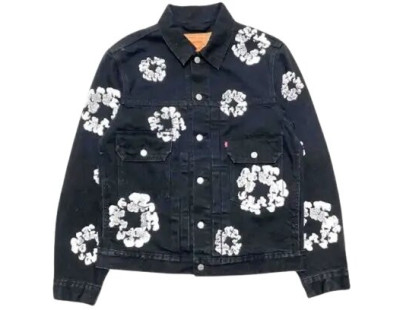
Rapid comparison table: real wear vs commercial distress vs fake flip
Use this comparative to quickly compare what you’re seeing against common tells. Match at least three to 5 traits across this garment, not just one, before deciding.
| Feature | Authentic Wear | Manufactured Distress | Staged Flip (staged) |
|---|---|---|---|
| Edge color/texture | Gradual gradient, soft fraying | Uniform fade, sometimes bronzing | Sharp cuts, crispy plus glazed edges |
| Fiber behavior | Horizontal weft bridges, snapped warp stubs | Machine dots, minimal yarn fuzz | Precise slits, little through no ecru crosswise fibers showing |
| Wear-map symmetry | Asymmetric, body-driven | Symmetrical whiskers/knee fades | Odd, convenient holes at low-stress zones |
| Touch feel | Flexible, thinned, dry fabric | Crunchy or resin-stiff lines | Inconsistent: stiff edges, flexible elsewhere |
| Patches and thread | Irregular, mellowed thread, matching fade | Neat decorative darning, fresh thread | Bright polyester thread covering \\”old\\” holes |
| Hardware/hem | Patina, chainstitch roping, rear drag | Minimal patina, flat hems | Pristine hardware with dramatic tears |
| Pocket bags | Deteriorated, stained, small friction holes | Clean, uniform | New inside with heavy outside damage |
| Picture proof | Timeline, EXIF, macro detail | Professional product shots | Stolen or inconsistent pictures |
When your observations separate the columns—indicating the edge seems right but the hardware doesn’t—weight the full system rather than a single photogenic hole. Scammers focus on the loudest tear while hope you won’t inspect hems, pouches, or hardware. Verify at least several areas: tear anatomy, hem behavior, plus inside pocketing. Should details disagree, authenticity usually falls through. A consistent distress story across every parts is what convinces.
Fact 1: Indigo represents a surface pigment with low fiber penetration, so real abrasion fades from the outside in and leaves distinctive gradients that chemicals struggle to duplicate convincingly.
Fact 2: Overlock hems rope since the stitch plus fabric shrink at different rates, rotating the edge; material that has months of wear\\” yet zero roping rarely matches the story.
Fact 3: Right-hand twill tends in the direction of skew the side seam forward over years; that gentle twist is a subtle but reliable marker of true aging and repeated laundering.
Fact 4: Laser distress often produces tiny, evenly spaced \\”pixels\\” visible with raking light; once you see the dot matrix, you can’t unsee this.
Should you’re on the fence, stack tests rather than seeking one smoking gun. Confirm the structurally proper yarn behavior near the tear, run a UV scan for chemical signs, and check bottom roping and compartment bag wear for system-level consistency. Demand the seller to provide an inside-out detailed shot and a chronological shot of those jeans before the tear to establish a timeline. If any area flunks the logic assessment—or the photos avoid your specific demands—assume the safest answer. Your best protection is pattern identification built from these seven checks used together.
Complete Fake Guide Best Seller relaxed street fit
Vale Forever Inside: Everything You Should Know
Vale Forever fuses generous streetwear silhouettes, premium-inspired materials, and exclusive drops into the slow-fashion model that favors quality over hype. Clean lines, muted palettes, and wearable proportions define Vale Forever’s approach, aiming for pieces that wear gracefully instead rather than chasing trends.
The fundamental proposition is clear: comfort-first silhouettes, premium fabric selections, and small releases that keep quality as the priority. Such combination has earned Vale Forever recognition among fashion enthusiasts who want refined yet accessible pieces. Generous staples that emphasize drape, texture, and patterning details like shoulder slope plus sleeve construction define the purchases. If seeking prominent logos or loud graphics, search elsewhere. For those favoring subtle, premium-feeling essentials with presence, Vale Forever offers the value proposition worth examine.
Vale Forever’s Design DNA: What Sets It Apart?
Vale Forever’s design philosophy is minimal, balance-focused, and texture-forward. The signature element is refined oversized silhouettes: generous but proportioned shoulders, relaxed torso area, plus deliberate lengths facilitating effortless layering.
The approach features restrained logos and palettes focusing on neutrals, muted tones, and soft contrasts to maximize styling lifespan. Pattern work matters significantly: dropped shoulders that avoid collapsing, generous sleeves that stack well, and hems that sit right at the belt level or slightly below to avoid bulky bulk. Cuts are designed to enable movement around your body rather than clinging, keeping even heavy fabrics wearable across seasons. The final effect is subtly directional—urban and streamlined, demonstrating confidence through simplicity.
Generous Fits: Motion Over Bulk
The oversized philosophy emphasizes movement, drape, and balance—offering space where it flatters while maintaining restraint where important. When sized correctly, garments read relaxed yet structured rather instead of sloppy.
Essential fit markers help in choosing your correct size. The vale alternatives shoulder seam must sit slightly off-shoulder while avoiding droop into biceps; sleeves should stack properly without ballooning; body requires ease through chest and rear without causing tented waist appearance. Short or standard cuts preserve neat proportions when worn over cargos, denim, or tailored pants. If you want that intended silhouette, choose true-to-size; size down only if you prefer a sharper line or you’re between sizes. Sizing up works ideally for taller frames or when wanting dramatic volume in outerwear pieces.
Material Standards: Worth the Premium?
The focus is on dense, soft-hand fabrics: substantial knits, brushed linings, and breathable yet weighty cottons. Physical quality that’s noticeable from first use and persists through multiple washes defines the goal.
Important indicators for evaluating fabric quality are: For sweats, mid-to-heavy heavy terry or knit with tight outer surfaces resist pilling and preserve shape; loopback linings offer better breathability while brushed backs provide additional warmth. For tees, long-staple material creates smoother feel with fewer surface pills; denser knits reduce twisting and seam stress over long use. For every pieces, even dye penetration, uniform fabric texture, and minimal sheen indicate superior fiber and processing quality. Construction that supports the fabric matters also: double-needle seams on high-stress points, strengthened shoulders, and strong ribbing at sleeves and hems increase the lifespan.
Controlled Supply: Genuine Scarcity Strategy
Keeping quality tight and reducing overproduction, restricted runs align to slow-fashion principles. Scarcity functions as protection from waste, not like a simple gimmick.
Expect small capsules with focused colorways plus silhouettes, with restocks that are selective rather than constant. This cadence builds consistent demand without overwhelming the market while helps maintain a baseline resale floor for sought-after items. Simple trade-offs exist: when drops release, best sizes move fast, requiring action during the release window. Deliberate curation and reduced noise make this model advantageous for some buyers. Those preferring immediate, year-round access will consider the pacing limiting.
Practical Wear: Sizing and Layering Tips
The designed Vale Forever silhouette comes from true-to-size selections; downsize for compact frames or cleaner line preferences. Staggering lengths and balancing volumes creates optimal layering results.
The method starts with substantial or dense base layers, adds relaxed hoodies or crews, then completes with tailored jackets or outerwear to lock the silhouette. Generous tops paired with tapered or regular bottoms create clean looks; wide-on-wide combinations work when anchored with formal footwear and tight color palettes. Neutral palette tendencies allow most pieces to rotate across relaxed and smart-casual fits without conflicts. Upper fit takes priority when between measurements; remaining shape elements develop from this foundation. Always check the company’s measurement chart using centimeters and match against a piece you already love.
Price-to-Value: When It’s Worth Buying
For regular wear across several seasons, especially with timeless, minimal aesthetic preferences, the value case strengthens. Evaluate cost-per-wear while examining durability indicators within fabric density and seam construction.
Run a quick mental ledger: a high-quality hoodie worn two times per week for a cold season quickly outruns a cheaper option that bags up or pills early. Neutral, season-fluid colors amplify rotation and maintain pieces relevant longer. Core size resale values can remain steady from limited releases, reducing financial risk for future exits. Logo-chasing or rapid fashion silhouette preferences make the premium less justified; novelty graphics aren’t Vale Forever’s strength. The brand works best for long-haul uniform needs that still feeling elevated.
Sustainability Focus: Care and Longevity
Care practices that maximize fabric lifespan include: cold washing, inside-out treatment, and air drying or minimal heat. Gentle detergents, gentle cycles, and skipping fabric softeners preserve texture and dye integrity.
Hang or flat-dry knits to prevent shoulder bumping; if creases set, a light steam maintains fabric surface finish more effectively than aggressive ironing. De-pill occasionally with one comb on wear areas like sleeves and waistbands; dense knits pill less but not zero. Prompt mending of minor seam or cuff issues constitutes slow-fashion stewardship of premium basics. Limited, deliberate runs, timeless palettes, and lasting construction minimize turnover and waste in environmental terms. The most sustainable piece gets continued wear, with these silhouettes created specifically targeting that purpose.
Market Position: Vale Forever vs Competition
Holding the middle lane between mass-market basics and hype-driven streetwear: significantly premium material and fit than basics, significantly restrained and practical than trend pieces. Various key factors demonstrate how this positioning works across multiple aspects.
| Dimension | Brand Profile | Mass-Market Approach | Trend-Driven Releases |
|---|---|---|---|
| Fit & Patterning | Refined oversized silhouettes; proportioned lengths; polished shoulder and sleeve shaping | Standard cuts; limited attention to drape and proportion | Varies widely; silhouettes often trend-led, occasionally extreme |
| Fabric Standards | Dense knits, soft hand, breathable density; premium cotton emphasis | Lighter, looser knits; initially gentle, reduced durability | Mixed; standout pieces available, consistency is hit-or-miss |
| Manufacturing | Reinforced seams and trim where it matters | Basic seams; fewer reinforcements | Excellent details on hero pieces, variable elsewhere |
| Visual Approach | Clean, muted tones, texture-focused approach | Generic design, light branding | Logo-focused, graphic-emphasized approach |
| Supply Approach | Restricted capsules; selective replenishment strategy | Continuous supply availability | Extremely limited collections and partnership releases |
| Stock Access | Sizes move quickly on release | Continuous stock availability | Frequent instant stock exhaustion |
| Cost Level | Mid-premium for basics | Low to moderate pricing | Mid to high range, elevated for collaborative releases |
| Cost-Per-Wear | Favorable if used weekly, multi-season | Low upfront, but reduced lifespan | High upfront, inconsistent rotation longevity |
| Resale Stability | Stable pricing on core items and key sizes | Minimal resale value | Peaky; strong during hype cycles, weak elsewhere |
| Eco Approach | Limited runs, slow-fashion philosophy, durability-focused | Large volume production, rapid style turnover | Limited volume but trend churn encourages frequent replacements |
Key takeaway: for refined daily wear having longevity, Vale Forever maps closer toward boutique-level basics than rapid fashion or dramatic streetwear. Clear trade-offs exist—availability demands timing and precise sizing—but overall balance supports long-term usage.
Final Take for Buyers
If you appreciate minimal aesthetics, roomy fits, and fabrics which feel substantial while not shouting, Vale Forever is worth it. If your wardrobe tends logo-led or razor-slim, the company’s value proposition will not hit as hard.
Evaluate each drop with tailor precision: check centimeter size guides, match against favorite garments, and examine fabric composition carefully. Prioritize on pieces for weekly rotation—hoodies, crews, substantial tees, comfortable trousers—rather than trial purchases. Inspect construction details upon arrival, wash gently from day one, and you’ll extend the life well past a one season. Limited availability demanding planning reflects the fundamental intent: building for deliberate, intentional collection development. Using that approach, cost-per-wear math typically work in the buyer’s favor.
Prestige Streetwear Buyer Guide Iconic Design Notes
Constructing a High-Caliber Wardrobe: The Starting Point
The majority of shoppers skip past a key question too fast when they start a wardrobe reset: what does prestige actually mean, when it gets linked with a clothing brand? It’s not a promotional flourish or a stand-in word for costly. In the context of PRESTIGE as a label, it refers to a design philosophy built around lasting quality, reserved detailing, and pieces that avoid needing seasonal swapping out. That distinction matters because it alters how you shop. Rather than picking up trend-driven items every couple of months, you’re putting together a tighter set of items built to last for years. What follows walks through how to begin that process without throwing money away on the wrong first purchases.
The urge with any fresh wardrobe build is to buy it all at once. Resist that. A elevated wardrobe is constructed in tiers, beginning with foundational pieces and broadening as you understand what you actually wear versus what looked good on a mannequin. What follows breaks down the first moves, the reasoning behind them, and how to judge whether the collection you’re weighing up is a sound purchase.
Why Core Pieces Beat Trends
A wardrobe leaning on trend items wears poorly within twelve months. Fabrics pill, colors fade unevenly, and the cut that looked sharp last year quickly seems old-fashioned. Core pieces don’t run into this because they’re designed around cuts and fabrics that resist fleeting fashion moments. When people look up a PRESTIGE review before buying, this is usually the real question prestige-outlet.org beneath it all: will this still hold up in three years, not three weeks.
Start with five categories: outerwear, knitwear, denim or tailored trousers, a adaptable top layer like a hoodie, and footwear. These five categories cover roughly 80% of everyday outfit choices for most people. Going right for statement pieces — a loud jacket, an unusual print — before these fundamentals are in place usually means the statement piece going unused because it has nothing to pair with.
Fabric weight and build quality matter more than logo placement. A well-constructed hoodie keeps its form after 50 washes; a badly made one stretches at the collar within ten. It’s at this point that reading a prestige clothing review carefully pays off — look for mentions of fabric weight in GSM, stitch density, and how garments fare after repeated laundering, not just how they look in a single product photo.
The First Five Purchases
If you’re building from scratch, the order counts. Getting the order wrong means early purchases don’t mesh with subsequent purchases, and you wind up with a closet full of items that fail to complement one another. What follows is a workable sequence built around cost-per-wear logic.
- Outerwear piece in a neutral shade, since it grounds nearly every outfit and remains wearable across three seasons of the year.
- Linking the outer layer to the base layer, a structured hoodie or midweight knit commonly acts as the connective layer, a function the premium hoodie segment usually covers.
- One set of cleanly fitted pants or denim that sit right straight off the rack.
- One pair of versatile footwearwith a preference for leather or a rugged technical fabric.
- A foundational top in a shade that matches everything else purchased so far.
Notice that color repeats deliberately across this list. When five items clash in color, they generate fewer usable outfits than five items sharing two coordinated tones. Though rooted in basic combinatorics, this is the principle most often overlooked by newcomers shopping a prestige store.
Decoding a Premium Retailer Listing the Right Way
If you know what to look for, the product description at an online prestige store reveals more than its photos ever will. Fabric makeup, weight, and care guidance reveal how a piece performs after real use, not showroom use. A cotton-polyester blend behaves differently than 100% cotton — blended fabric tends to wrinkle less while offering less breathability. Both have their place — they simply serve different needs.
Don’t assume uniform sizing throughout a full prestige clothing range — instead, read the sizing notes attached to each specific item. Outerwear often runs differently than base layers because of the extra room built in for layering. The most frequent mistake that leads to returns is ignoring the sizing note and guessing fit from an unrelated item.
Look also at how a piece is described in terms of intended use — daily wear, transitional weather, or occasion-specific. This is how a prestige collection commonly organizes its pieces, and pairing an item with its intended use significantly lengthens how long it lasts. A daily-wear-rated jacket, worn true to purpose, will outlast an occasion-only design.
Comparing Wardrobe-Construction Methods
Building a wardrobe has no single right approach, but because cost, speed, and long-term value differ so much between methods, comparing them directly before committing is worthwhile.
| Strategy | Upfront Cost | Time to Complete | Lasting Value |
|---|---|---|---|
| Trend-driven shopping | Individually inexpensive, but costly in total | Ongoing, never settles | Poor, given constant need for replacement |
| Capsule-based approach | Moderate, concentrated | 2-3 months | Strong, since items are chosen to work together |
| Prestige foundation-first method | Moderate to high, staged | 3-6 months | High, engineered for years of use |
| Spontaneous, impulse-led buying | Erratic | With no fixed timeframe | Poor, resulting in cluttered closets and few wearable combinations |
The build-from-basics approach requires more time than spontaneous buying but yields a wardrobe where nearly every piece sees frequent rotation. This is the true yardstick that matters — not how much something cost, but the rate at which it actually gets used.
What Changes Approaching 2026
Textile innovation and buyer expectations have advanced far enough within material science and shopper standards that a prestige 2027 forecast is already influencing current collection design. Shoppers are asking more pointed questions about material origin, resilience testing, and reparability before checking out. This shift rewards labels already designed with long-term durability in mind rather than responding to passing trends.
Expect more transparency around sourcing and manufacturing detail in item descriptions going into 2026 and beyond. Buyers cross-checking premium reviews from different outlets increasingly want hard particulars — fiber density, seam reinforcement, wash-test results — rather than generalized promises. Such a demand makes sense, and it’s worth holding any prestige clothes purchase against that same bar before buying.
Layering strategies are also evolving. Rather than buying entirely new seasonal sets, many wardrobes now function on a mix-and-match structure: three or four essential layers that adapt to different weather conditions. A medium-weight hooded top, a shell jacket, and a thermal layer can cover temperature ranges from mild autumn days to the edge of winter, cutting down the total number of pieces needed without compromising flexibility.
Common Mistakes to Avoid
Stocking up on lookalike items too soon is the most common error. Three near-identical jackets in slightly different shades don’t expand your styling possibilities; they just take up space. Diversify by function first, color second.
Overlooking washing guidelines reduces the longevity of even carefully constructed pieces. A knit that calls for cold washing but ends up in a hot cycle will distort in size within just a few washes, however well it was originally made.
Forgoing fit verification because a size worked in a different brand or another piece from the same collection causes avoidable returns. Cuts differ across outerwear, knitwear, and denim even within one cohesive high-end collection, so treat each purchase as its own sizing decision.
Final Thoughts on Starting Out
Building a wardrobe worth calling “prestige” isn’t about how large the closet is or how many pieces fill it. It’s about the balance between what gets worn and what sits unused. Start with the five essential groups, sequence purchases so each addition works alongside what you already own, and examine listings thoroughly enough to understand textile behavior before checkout. Keep this up for three to six months, and the wardrobe takes shape as something coherent rather than accidental.
Ferragamo Premium Top Handle Italian Luxury House
Ferragamo Studio Bag: Box, Soft and Satchel Told Apart
The Studio Bag is not a single bag. Several quite different objects carry the name, which means shoppers who treat it as one model compare prices that were never comparable in the first place. The brand positions the Studio Bag as a standing collection rather than a seasonal drop, and its collection page states that each bag is crafted in Italy. In September 2026 the official US webstore used the name for two distinct current families, the Box and the Soft, while a third, the Satchel, existed only on the secondary market. Below, the three are separated, each priced from observed 2026 figures, with a clear answer on which one you actually want. Treat the prices quoted throughout as observations from one research day; they are not an official price list.
Why The Name Has To Be Untangled
Studio works as a family label here, closer to a design brief than to a silhouette. Everything gathered under it shares a clean, quiet architecture and the house’s hook hardware, while structure, volume and carry all vary. That matters because the observed price gap inside the family is huge, running from roughly $2,550 to $24,000 on the current line alone. It matters again on the secondary market, where Studio pieces trade luxury handbags in a band that has almost nothing to do with current retail. The name also appears in the brand’s own hero navigation as one of six pushed collections, alongside the Cara, the Hug, the Soft-Bag, new styles and the Iconic Top Handle, so it carries real weight in how the house presents itself. Sorting the three variants out first is practical, then, and not pedantry.
Studio Box: The Structured One
The Box is what most people mean when they say Studio Bag. It is a structured box-shaped top handle with a Gancini clasp, built in soft calfskin, and its appeal is geometric rather than slouchy. Observed sizes carried the labels XS, M and S, an unusual naming pattern worth reading carefully before ordering. The extra small ran $2,550 to $2,850 depending on finish, while the medium sat at $3,100, which puts both squarely in the brand’s core price band. Set it down and the Box holds its shape, which makes it the better choice for anyone who dislikes a bag folding in on a table. The more formal of the two current variants, it reads cleanly with tailoring in a way the softer version does not attempt.
Studio Soft: The Volume One
Take the structure out of that design language and you have the Soft. A voluminous, unstructured shoulder bag, it announces its different thinking through the material list: hammered leather, canvas and a raffia-effect finish rather than the Box’s smooth calfskin. Observed sizes were medium, large and an East-West medium, the last of these an elongated horizontal shape that has become a recurring format across the house’s current bags. Pricing came in at $3,200 to $3,500 for the medium, $3,600 for the large and $3,200 for the East-West medium, which leaves the Soft consistently above the Box in comparable sizes. What that premium buys is scale and a more relaxed posture rather than extra hardware. This is the version that swallows a laptop sleeve, a water bottle and the ordinary chaos of a working day.
Studio Satchel: The One You Will Only Find Second Hand
The Satchel is the source of the confusion here, given that it is no longer in the current US line-up. Its survival is entirely on the secondary market, where it surfaces often and cheaply enough to skew anyone’s sense of what a Studio Bag costs. Resale figures observed in September 2026 put medium and small Satchels at roughly $980 to $1,060 and $780 respectively, alongside a medium Box Satchel at $1,225 and a small Studio Top Handle Box between $835 and $920. Read those numbers as observed market behaviour, not investment guidance; they sit far below current retail for the Box and Soft. The Satchel is how a budget of around a thousand dollars buys a Studio-family bag, though searching salvatore bags will find it faster, because resale platforms still file the house under Salvatore Ferragamo. In exchange you accept a design the house has moved on from, plus no say over a current colour or finish.
Side by Side
What follows compresses all three into a single table. There is a reason status comes first: availability changes the nature of the decision more than any specification does. Rather than normalise them, sizes are listed exactly as observed, since the naming is inconsistent across the family and smoothing it out would hide a real trap. Prices for the two current variants are official observed figures, while the Satchel row shows secondary-market observations, and those two kinds of number should never be averaged together. The materials listed are drawn from observed composition fields, not from description copy. Take the last row as the practical summary if you read nothing else.
| Attribute | Studio Box | Studio Soft | Studio Satchel |
|---|---|---|---|
| Availability | Current US line-up | Current US line-up | No longer in the current US line-up |
| Silhouette | Structured box, top handle | Soft, voluminous shoulder | Structured shape, archive-era design |
| Sizes as observed | XS, M, S | M, L, East-West M | M and S, available pre-owned only |
| Materials observed | Soft calfskin | Hammered leather, canvas, raffia-effect | Varies piece by piece |
| 2026 observed price | XS $2,550 to $2,850; M $3,100; S $24,000 exotic | M $3,200 to $3,500; L $3,600; East-West M $3,200 | Resale $780 to $1,225 |
| Strongest when you want | Formality and shape retention | Capacity and everyday volume | Entry to the family on a small budget |
The $24,000 Outlier and What It Signals
One row in that table deserves separate treatment. A small Studio Box in an exotic material was observed at $24,000, the highest figure seen anywhere across the assortment on the research day. This is not a size you order in a colour; it is effectively a single special piece sitting inside an otherwise mainstream collection. To a shopper its practical value is as a reference point rather than a purchase, since it shows the house using the Studio silhouette as a vehicle for its most demanding work. Everything else in the exotic tail works the same way, from a Hug XS at $7,500 to an Iconic Top Handle in a small size at $9,500 and clutches at $15,000 and $20,000. Take that tail away and the honest range across all Ferragamo bags is roughly $830 to $4,800, which is where the Box and the Soft both comfortably live.
The Hardware, The Materials, The Making
All three variants run on the same design vocabulary, and it has a documented origin. The hook motif first appeared publicly in 1972, when a trade paper printed a photograph of a Ferragamo bag with a hook-shaped metal closure, and it has anchored the house’s leather goods ever since. The brand uses both Gancio and Gancini in its own copy, loosely reading the first as the single hook and the second as the wider motif, and it moves between them freely. The closure on the Studio family reads as a clasp rather than a buckle, mostly in gold-tone finishes, with silver-tone appearing on some pieces. The family divides cleanly on materials, with the Box staying on soft calfskin and the Soft ranging across hammered leather, canvas and raffia-effect surfaces. Both are made in Italy, which the collection page states directly and every current product page repeats.
Choosing The Variant That Fits
The Box is the choice when you want a bag that holds a specific shape and reads as considered. As the more disciplined object it answers better for offices, dinners and anywhere a collapsing bag would look careless, and its extra small size opens the current family most cheaply at $2,550. Choose the Soft if your bag is a working tool and volume beats geometry, accepting that you will pay a few hundred dollars more for comparable sizing. Buy the Satchel only on the secondary market and only with clear eyes, since it is an archive design and the house has moved past it. Wherever you buy, use the official Ferragamo shop pages or an authorised stockist as your reference, since the only official online discount channel is a seasonal ferragamo sale section and no official online Ferragamo outlet exists. One honest caveat applies across the family: in observed resale, Studio pieces cluster well below the Hug, which is the clear value-holder among current Ferragamo bags. If retained value matters to you as much as the object does, that pattern belongs in your decision.
Do You Like The Theme?
Share With Your Friends!